axxessp.r1@gmail.com
Thornton, Colorado




October 30, 2026
Exterior House Painters in Denver: Paint Brick or Not?
- Painting brick is a long-term decision. The Brick Industry Association says paint can be very difficult to remove from brick without damaging it, so decide before the first coat.
- Prep decides how long the finish lasts. Brick needs cleaning, efflorescence removal, mortar repair, drying time and an alkali-resistant masonry primer.
- Weather sets the schedule. The industry guidance calls for air, material and surface temperatures of at least 40°F, so late-fall cold snaps can close the window fast.
- Check approvals first. Homes in a Denver landmark or historic district, and homes under an HOA, may have rules about exterior changes.
Exterior house painters in Denver get one question again and again from owners of brick ranches: should we paint it? The short answer is that painting brick can look great, but it changes the wall for good and adds a repainting job to your future. AXXESS Painting and Remodeling serves Denver homeowners with exterior house painting, and this guide explains what to weigh before you commit.
Most painting advice assumes wood or fiber cement siding. Brick behaves differently. It is porous, it sits in alkaline mortar, and it moves water in and out of the wall. A coating that traps moisture can cause more trouble than the old red brick ever did. We pulled guidance from the brick industry, a masonry trade group and federal sources so you can judge any estimate with facts in hand.
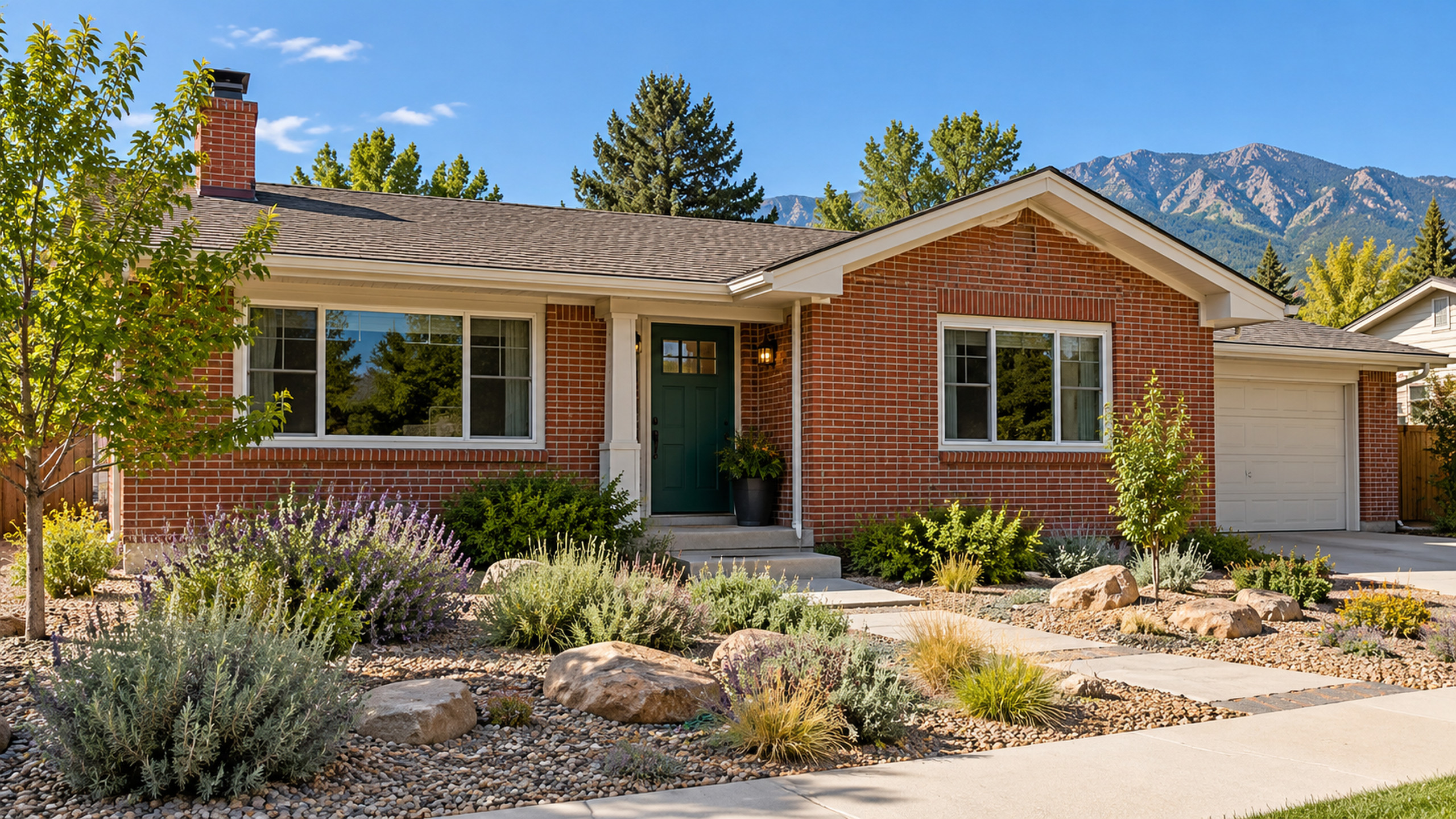
The photo below is an AI-generated illustration of a brick ranch with a green front door. It is not an AXXESS project. It shows the kind of home this guide is about: original brick, painted trim and a door that carries the color.
Should you paint your brick home in Denver?
Paint only if the look you want is worth the upkeep. Painted brick is hard to undo, and painted exterior brick can need repainting on a regular schedule. If your brick is sound and you simply dislike the color, compare stain, limewash and mineral coatings before choosing a standard paint.
What painting changes for good
The Brick Industry Association (BIA) states in its technical note on changing the appearance of brick that paint can be very difficult to remove from brick masonry without causing damage. That single sentence should slow down any quick decision. Stripping paint off brick often means chemicals or aggressive cleaning, and the U.S. General Services Administration warns that the wrong acid can burn and dissolve both the brick and the mortar.
When leaving the brick alone is the better call
- The brick is in good shape. Sound brick with clean mortar joints needs little more than cleaning and trim work.
- The wall stays damp. GSA warns against vapor-impermeable paint on surfaces that might hold dampness from the ground or through the walls. Fix the water problem first.
- The home is in a protected district. Denver reviews exterior work on landmarks and in historic districts, so ask before you change brick.
- You do not want a recurring task. The BIA notes that acrylic latex paint on brick creates a recurring exterior maintenance task.
What are your options besides standard exterior paint?
You have four main routes for brick: acrylic latex paint, stain, limewash and mineral paint. They differ in how they bond, how well they let moisture out, and how long they last. The sources we reviewed give the following picture.
- Acrylic latex paint: It forms a film on the surface. The BIA says this film is typically vapor semi-permeable and recommends avoiding too many coats or heavy applications. It is the most common choice and the one with the most color options. The Masonry Advisory Council reports that paint manufacturers suggest recoating every three to five years, and that homes with overhangs may go longer.
- Brick stain: The Masonry Advisory Council says stain penetrates the pore structure and bonds with the brick, which avoids the flaking that surface paint can show. Stain works best on brick that has never been painted, because it needs to soak in.
- Limewash: The BIA says limewash can last five to ten years or more depending on the weathering you want. It leaves a soft, chalky look. It should not be sealed where permeability needs to stay high.
- Mineral paint: The BIA says mineral paints do not change the water vapor permeability of the substrate and typically carry warranties of 15 years or more. They are a specialty product, so ask who in your area applies them.
What prep does brick need before any paint goes on?
Brick needs six steps before painting: cleaning, efflorescence removal, mortar repair, neutralizing if chemicals were used, a drying period, and a masonry-rated primer. Skipping any step is the most common reason painted brick fails early. Prep is also where cheap bids cut corners, so ask about each one.
- Clean with the gentlest method that works. The BIA says existing masonry must be cleaned before treatments and recommends avoiding muriatic acid. GSA also advises against sandblasting, and says high-pressure water can erode soft brick and drive moisture into the wall.
- Remove efflorescence. Efflorescence is the white, powdery salt that shows up on brick when moisture moves through it. The BIA says it should be removed before treating the surface, and that you should check whether it returns.
- Repair mortar. Deteriorated, loose or missing mortar should be repointed, which means replacing damaged mortar in the joints. The BIA says exterior repointing is best done by an experienced mason, so plan that step before painters arrive.
- Neutralize after chemical cleaners. The BIA strongly recommends neutralizing the surface after paint strippers or acid-based cleaners. GSA says a neutral pH of 7 should be reached before repainting.
- Let the wall dry. The BIA says to wait at least 24 hours after cleaning for masonry to dry, and longer if rain or high humidity gets in the way.
- Prime with the right product. Brick sits in alkaline mortar, which can weaken ordinary paint. The BIA recommends an alkaline-resistant primer or a paint designated for masonry. GSA suggests an acrylic or vinyl latex masonry primer that is mildew and alkali resistant.
Why gutters and flashing come first
GSA advises inspecting flashing, gutters and downspouts and fixing them before paint removal and repainting work. The reason is simple. A leaking gutter that soaks one section of brick will lift paint from that section no matter how good the primer is. Walk the house after a rain and look for dark streaks or wet bricks near downspouts, then fix those first.
When is the best time to paint brick in Colorado?
Brick paint needs steady, dry weather. The BIA gives a typical minimum air, material and surface temperature of 40°F for applying treatments, and says to avoid painting surfaces less than 5°F above the dew point. On the Front Range, that means a mild afternoon in late fall can work while the following morning cannot.
For more on how late in the year exterior painting can go, see our guide on how late you can paint your house exterior this fall. If you are comparing sun exposure on different sides of the house, our post on exterior house painters in Aurora looks at how sun exposure shapes an exterior paint plan.
What about lead paint on older Denver homes?
Many brick homes have painted wood parts, such as soffits, fascia, window trim and doors, and older paint on those parts may contain lead. EPA's guidance on scraping and repainting siding on a pre-1978 home says its Renovation, Repair and Painting (RRP) rule applies unless a certified person determines that lead-based paint is not present.
The brick itself is usually not the issue. The trim around it is. If your home is older, ask any painter whether the crew follows EPA's lead-safe rules and whether anyone on the job holds the right certification. EPA's page says the determination that a surface is free of lead-based paint must be made by a certified inspector, risk assessor or certified renovator. A good painter will answer this question without hesitation and put the answer in writing.
Do you need approval to paint brick in Denver?
It depends on where the house sits. Denver's Landmark Preservation design review covers exterior work on locally designated landmarks and properties in historic districts. The city page we reviewed does not mention paint, so call Landmark Preservation before changing brick on a designated property. Many neighborhoods also have an HOA with its own color and material rules.
We do not tell homeowners that painting is exempt or approved. That call belongs to the city and your HOA. Our post on stucco painting in Highlands Ranch shows how an HOA approval step can fit into a painting schedule.
How do you choose exterior colors that work with brick?
Start with the brick you are keeping or painting, then choose trim, door and garage colors that suit its undertone. Red brick has warm undertones, so crisp neutrals and deep greens, charcoals or blues around it tend to look balanced. Always test large samples on the wall and watch them in morning, noon and evening light.
Light changes everything on a Colorado house. Strong Colorado sun can change how a color reads, so a shade that looks right indoors may look different on the wall. A sample board taped to the brick for a few days beats a paint chip every time. Our guide on paint color consulting in Denver walks through how to test samples in different light.

What should an estimate for brick painting include?
A solid estimate names the cleaning method, the prep steps, the primer, the paint, the number of coats and the weather conditions the crew will wait for. It should also say who handles mortar repair. If an estimate says only "paint exterior brick," ask for more detail before you sign anything.
Use this checklist when you compare bids from exterior house painters in Denver:
- Cleaning method: Which method will they use, and will they avoid acid and sandblasting?
- Efflorescence plan: What happens if white salt returns after cleaning?
- Mortar repair: Who repoints damaged joints, and is it included or separate?
- Primer and paint: Which exact products, and are they rated for masonry?
- Coats: How many coats of each? Remember the BIA advises against too many coats or heavy applications.
- Weather rules: What temperature and dry-time rules will the crew follow?
- Lead-safe practices: Does the crew follow EPA rules on older homes?
- Insurance and license: Can they show proof? AXXESS is licensed and fully insured.
For a broader checklist on picking a painter, read our post on how to choose a reliable exterior painter.
How does AXXESS handle exterior painting for Denver homes?
AXXESS Painting and Remodeling is a licensed and fully insured painting and remodeling company based in Thornton, Colorado, serving Denver and nearby cities. Our work uses premium materials and techniques, we stay responsive during the job, and we follow a four-step service process that ends with a final walkthrough. You can read more on our About page.
Whoever you hire, a good estimate should flag moisture, mortar or efflorescence problems before painting starts, not after. You can see the full list of what we do on our interior and exterior painting page.
Frequently asked questions
Can you paint over brick that was already painted?
Yes, if the old paint is sound. Loose or peeling paint has to come off first, then the surface needs cleaning, drying and a masonry-rated primer. GSA says repainted walls should dry completely before priming and recommends two top coats from the same manufacturer as the primer.
How often does painted brick need repainting?
It depends on the product and the exposure. The Masonry Advisory Council reports that paint manufacturers suggest recoating every three to five years, and homes with overhangs may go longer. The BIA says limewash can last five to ten years or more. Ask your painter for the manufacturer's guidance on the exact product.
Is it better to stain or paint brick?
Stain penetrates the brick and bonds with it, so it does not flake like surface paint. Paint offers more color choice and covers more imperfections. Stain generally suits unpainted brick, since it needs to soak in, while paint is the usual choice for brick that was painted before.
Can you paint brick in cold weather?
Only when conditions allow. The BIA gives a typical minimum air, material and surface temperature of 40°F and says to avoid painting surfaces less than 5°F above the dew point. On a cold Front Range morning, the wall can be below that minimum even when the afternoon feels mild.
Do you need a permit to paint a brick house in Denver?
Painting is not something we can clear for you. Denver reviews exterior work on landmarks and in historic districts, and the city page we read does not mention paint. Call Landmark Preservation if your home may be designated, and check your HOA rules as well.
Ready to talk through your brick home?
Brick can look great painted or left as it is, and the right choice depends on its condition, your neighborhood rules and how much upkeep you want. AXXESS can look at your home, explain what we see and give you a clear plan with no pressure.
Call (720) 226-5092 or request your free estimate and we will set up a time to look at your Denver home.
Sources reviewed for this guide:
- Brick Industry Association, Technical Note 6: Changing the Appearance of Brick Masonry (August 2024)
- Masonry Advisory Council, Brick... Paint or Don't Paint (May 2019)
- U.S. General Services Administration, Chemically Removing Paint From and Repainting Brick Masonry
- U.S. EPA, RRP rule guidance on scraping and repainting siding on a pre-1978 home
- City and County of Denver, Landmark Preservation Design Review Process
