axxessp.r1@gmail.com
Thornton, Colorado




How Late Can You Paint Your House Exterior in Thornton This Fall?
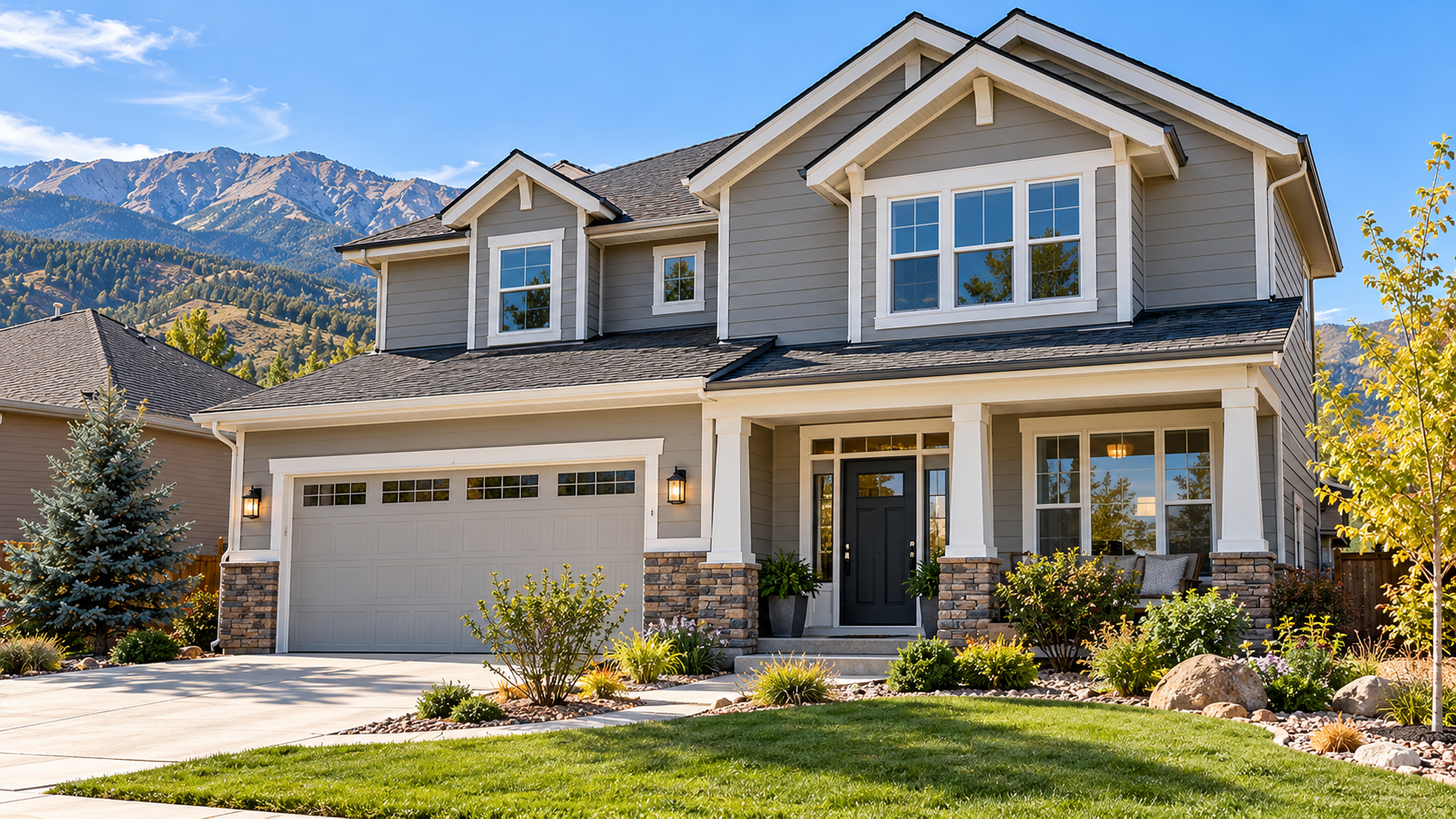
If you have been putting off a paint job, you are probably asking how late you can paint your house exterior this fall before Colorado weather makes the decision for you. Thornton and the rest of the Denver metro get a real window each year when it is simply too cold for exterior paint to cure properly, and that window usually arrives sooner than most homeowners expect. This guide walks through what temperature actually does to exterior paint, how to read your own local forecast, and what makes more sense once the outdoor window closes.
Quick Summary
- Most exterior paints need air and surface temperatures to stay in a specific range during application and for roughly 48 hours afterward while the film cures.
- Many traditional exterior paints are rated down to about 50 degrees Fahrenheit, while some newer low-temperature formulations are rated for application down into the mid-30s.
- Surface temperature matters as much as air temperature. A shaded north wall can sit well below the air temperature on a sunny fall day.
- Denver-area first frosts typically arrive in early-to-mid October on average, though the exact date shifts from year to year and by elevation.
- Once nights are routinely near or below freezing, exterior painting stops being a reliable option until spring.
- South- and west-facing walls usually get more usable painting days later into the season than shaded, north-facing walls.
- When the exterior window closes, interior painting, cabinet painting, and remodeling projects are a practical way to keep improving the home through the colder months.
- Booking early, rather than waiting for the first cold snap, gives you the best shot at finishing exterior work before winter settles in.
What Temperature Is Too Cold to Paint Exterior Siding?
In general, once daytime highs stop reliably climbing into the 50s and overnight lows start dropping toward freezing, you are at or past the edge of a safe window for most exterior paints. Traditional exterior latex paint is typically rated for application at 50 degrees Fahrenheit and above, and several manufacturers now offer lower-temperature formulations rated for application down to roughly 35 degrees. Below those thresholds, paint can take much longer to cure, or may not cure correctly at all, which usually shows up later as poor adhesion, uneven sheen, or early peeling.
Why Temperature Matters So Much for Exterior Paint
Paint is not just about getting color on the wall. It is a chemical process, and that process needs warmth to finish correctly. When the temperature drops too low during or shortly after application, the paint film cannot form the way it is designed to, and the finish that results is often weaker than it looks on day one.
Air Temperature vs. Surface Temperature
Homeowners often check the air temperature on their phone and assume that settles it, but the surface being painted can run quite a bit cooler or warmer depending on sun exposure and shade. A wall in direct afternoon sun can be noticeably warmer than the air around it, while a shaded north-facing wall or an area under an overhang can sit well below it. Our crews check both before deciding whether a given day, or a given wall, is a go.
Why the 48 Hours After Painting Matter Too
Getting through application is only half the job. Most exterior paints also need the temperature to stay in the recommended range, and above the dew point, for roughly 48 hours afterward so the film can cure properly. A warm afternoon followed by a hard freeze overnight can undo the benefit of good painting weather during the day. This is one of the most overlooked parts of fall scheduling, and it is usually the reason a seemingly fine day turns out to be a poor choice.
When Does Exterior Painting Season End in the Denver Metro?
There is no single calendar date that applies everywhere along the Front Range, since Thornton, Denver, Boulder, and the surrounding communities each sit at slightly different elevations and see slightly different patterns. That said, this region's average first fall frost typically lands in early-to-mid October, and nights consistently near or below freezing usually become the norm sometime in October or November. Many years bring a stretch of mild, stable weather after the first light frost, which is often workable, but the reliable window for exterior painting is usually closed by the time snow becomes a regular visitor.
A Practical Timeline for Front Range Homeowners
| Time of Year | Typical Conditions | What It Usually Means for Exterior Painting |
|---|---|---|
| Early-to-mid September | Warm, stable days and cool nights | Generally a strong window, especially for larger jobs |
| Late September to early October | Daytime highs still comfortable, but nights cooling | Still workable, though 48-hour cure windows need closer attention |
| Mid-to-late October | First frosts common, some sunny stretches remain | Narrower windows, best reserved for south- and west-facing walls |
| November and beyond | Nights commonly near or below freezing | Exterior painting is usually not reliable until spring |
These are general seasonal patterns for the region, not a forecast for any specific week, so always check the actual extended forecast before committing to a project this late in the year.
How to Tell If You Still Have Time for Exterior Painting This Year
Before you call around for quotes, it helps to run through the same checklist our estimators use when a homeowner asks whether fall painting is still realistic.
- Pull up a 7 to 10 day extended forecast, not just tomorrow's high, since a single warm day does not make a painting window.
- Check that nighttime lows are projected to stay above the minimum cure threshold for at least 48 hours after the planned application date.
- Think about which walls need painting and when they get direct sun, since surface temperature can be well above or below the air temperature.
- Prioritize south- and west-facing elevations first, since they typically hold usable temperatures later into the season than shaded sides of the house.
- Build in a buffer day or two in case an early cold front moves the schedule up, and have a plan for finishing any remaining sections in spring if needed.
Signs It's Time to Shift to Indoor Projects Instead
At some point, fighting the calendar stops making sense. Here are the signs we look for before recommending a homeowner wait until spring for exterior work.
- Overnight lows are routinely near or below freezing for several nights in a row.
- Morning frost or dew is lingering on siding well past midday.
- The extended forecast shows no real stretch of stable, mild weather.
- Snow has already made an appearance, even if it has melted off.
- You are spending more time thinking about holiday plans than ladder weather.
What We Recommend When the Exterior Window Closes
Once outdoor painting is off the table for the season, the colder months are still a good time to invest in the house, just indoors instead. Interior painting, cabinet painting, kitchen remodeling, bathroom renovation, and basement finishing all move forward regardless of what is happening outside, and many homeowners use the fall and winter stretch to tackle projects they could not get to during the busy exterior season. Our team works across Thornton, Denver, Westminster, Boulder, Broomfield, Erie, Aurora, Brighton, Arvada, and the greater Front Range on both sides of that seasonal line, so shifting from an exterior quote to an interior one is usually just a conversation, not a scheduling headache.
Exterior painting season has a closing bell in Colorado. Interior projects don't.
Conclusion
The short version is this: once nighttime lows stop reliably clearing the mid-30s to 40s and a stable 48-hour window gets hard to find, exterior painting in the Denver metro stops being a sure bet. Checking the extended forecast, prioritizing sun-exposed walls, and building in a buffer are the practical steps that can still get a job finished before winter, and if the timing does not work out, interior painting and remodeling projects keep the momentum going through the colder months. If you are trying to figure out whether there is still time for your project this year, or you would rather plan an interior upgrade for the winter, our team is happy to take a look and talk through the options. You can reach us at 720-226-5092 to schedule an estimate anywhere across Thornton and the surrounding Front Range communities.
Frequently Asked Questions
Can you paint exterior siding in November in Colorado?
Sometimes, but it depends heavily on the specific stretch of weather. Once overnight lows are routinely near or below freezing, which is common in the Denver metro by November, reliable 48-hour cure windows become hard to find. A mild, stable week can still work, especially on sun-exposed walls, but it is usually the exception rather than the rule by that point in the year.
What happens if you paint exterior siding when it's too cold?
Paint applied below its rated temperature range typically cures slowly or incompletely, which can lead to poor adhesion, a dull or uneven finish, and a coating that fails well before it should. The damage is not always obvious right after application, which is part of why professional painters pay close attention to temperature rather than just going by how the day feels.
Is fall a good time for interior painting in Thornton?
Yes. Interior painting is not weather-dependent the way exterior work is, so fall and winter are typically a convenient time to tackle it, often with more flexible scheduling than during the busy spring and summer exterior season.
How far in advance should I schedule exterior painting before winter?
As soon as you know you want the work done this year. Contractor schedules fill up fast once homeowners realize the season is closing, and booking early gives you a better chance of landing a stretch of workable weather rather than racing the first hard freeze.
Do paint manufacturers allow painting below 50 degrees?
Some do. A number of manufacturers now offer exterior formulations rated for application down to roughly 35 degrees Fahrenheit, though the specific minimum always depends on the product. Checking the technical data for the exact paint being used, rather than assuming a single rule applies to every product, is the safest approach.
