axxessp.r1@gmail.com
Thornton, Colorado




October 26, 2026
Cabinet Painters in Denver: Painting Oak Cabinets
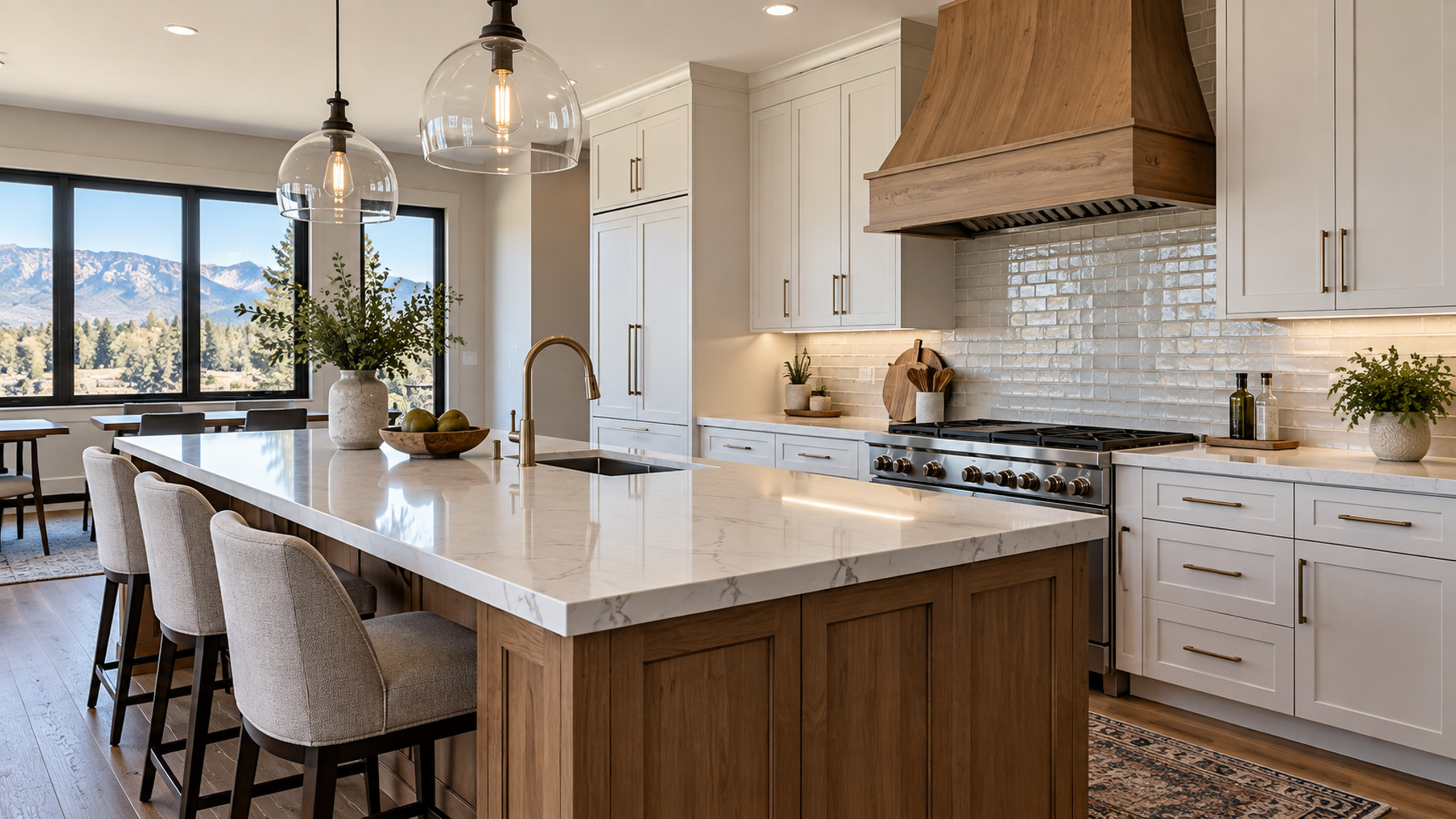
- Yes, oak cabinets can be painted and look smooth. The open grain has to be filled first, or the texture will show through the paint.
- Prep decides the result. Degrease, sand, prime, fill the grain, sand again, then paint in thin coats.
- Plan for cure time. One Benjamin Moore cabinet and trim paint is dry to the touch in 4 to 6 hours, ready to recoat in about 16, and needs several days to cure.
- Ask about lead if your home is older. The EPA requires certification for paid work that disturbs paint in homes built before 1978.
Cabinet painters in Denver get one question more than any other: can solid oak cabinets be painted without the wood grain showing through? Yes, they can. A smooth painted finish on oak takes extra steps, mainly filling the grain, and those steps are where cheap jobs and careful jobs part ways.
AXXESS Painting and Remodeling is a licensed and fully insured painting and remodeling company based in Thornton, Colorado, and Denver is one of the cities we serve. This guide explains how oak cabinets are prepared and painted, how long the process takes, what to ask before you hire, and when painting is not the right call.
Can you paint oak cabinets and get a smooth finish?
Yes. Oak cabinets can be painted with a smooth, durable finish if the open grain is filled and the surface is primed correctly. Skipping the grain fill leaves visible lines and texture under the paint. The finish is only as good as the prep underneath it.
Oak is a hardwood with a pronounced, open grain. Under a coat of paint, the grain looks like fine ridges and pores. Some homeowners like that look because it keeps a bit of the character of real wood. Others want a flat, furniture-style finish with no texture at all.
If your cabinet boxes and doors are in good shape, painting is often a practical way to change a dated kitchen without replacing everything. If the doors are warped, the veneer is peeling, or the boxes are water damaged, paint will not fix those problems. We cover that decision later in this guide.
Why is oak harder to paint than other cabinet wood?
Oak has deep, open pores that paint does not fill on its own. Smoother woods can often be sanded, primed, and painted with little extra work. Oak needs a grain filler or a filling primer so the pores are level before the finish coats, or the grain will telegraph through.
Paint is a thin film. It follows the surface under it. When that surface has pores, the film dips into them and the light catches the edges. The result is a faint ribbed pattern that is easy to see on large flat doors, especially under kitchen lights or from a window.
How do cabinet painters prepare and paint oak cabinets?
A careful process has five stages: degrease, sand, prime, fill the grain, then apply thin finish coats with light sanding between them. Doors and drawer fronts are usually removed and labeled so every surface can be reached and every piece goes back where it came from.
A published iFixit guide on painting oak cabinets walks through removing and labeling the doors, scrubbing them with dish soap or trisodium phosphate, sanding, priming, filling the grain, and finishing with sanded topcoats. Benjamin Moore's technical guidance for its Advance paint lists a similar sequence. Here is how those steps look in practice.
Step 1: Remove, label, and clean
Doors come off, hardware comes off, and each piece is labeled so it returns to its original opening. Everything is cleaned with a degreaser. The iFixit guide names dish soap as a cleaner, with trisodium phosphate as an alternative, and recommends gloves and eye protection when using it.
Benjamin Moore's guidance makes a point worth repeating: clean before you sand. Sanding a dirty surface can push grime into the wood.
Step 2: Sand and fill old holes
Benjamin Moore's Advance instructions call for sanding with 150 to 220 grit paper, working with the grain, until the old finish is rough. Old hardware holes are filled with sandable putty or wood filler if the new hardware will sit in different spots. Dust is then vacuumed up and the surface is wiped with mineral spirits or a tack cloth.
Step 3: Prime
Primer gives the paint something to grip. Benjamin Moore specifies its Fast-Sanding Primer for wood under Advance, tinted close to the finish color, and warns not to use lacquer-based primers or undercoaters with that paint. Primer choice depends on the paint system, so a good painter matches the two and reads the product data sheet.
Step 4: Fill the grain
This is the step that separates a smooth finish from a textured one. The iFixit guide applies a grain filler with a plastic scraper after the first coat of primer, then wipes off the excess. The filler settles into the pores, and the surface is then sanded smooth following the product directions.
Product directions set the exact order, so a good painter follows the data sheet for the filler and primer they chose.
Step 5: Finish coats
Both sources call for light sanding before the topcoats. The iFixit guide sands with 220 grit before applying the first and second topcoat, then inspects for blemishes and touches up before reassembly. Benjamin Moore also recommends sanding the dried primer lightly with 220 grit or finer paper.
Two thin coats generally behave better than one thick coat. Thick coats sag, drip, and take longer to harden.
How long does it take to paint kitchen cabinets, and when are they ready to use?
Expect the work itself to take several days, and the paint to keep hardening after that. For Benjamin Moore Advance under ideal conditions, the company lists dry to the touch in 4 to 6 hours and recoat in about 16 hours. The final coat needs several days to cure before cabinets go back into heavy use.
Those drying numbers are for one specific product. Other cabinet coatings have different recoat and cure times, so ask your painter for the data sheet of the exact product going on your doors. Do not rely on a general rule.
Does Denver's dry climate affect painted cabinets?
It can affect the wood more than the paint. Wood expands and contracts as the moisture in the air changes, and Denver has large swings between temperature and dew point. Over a year, cabinet doors can move slightly, which is why hairline cracks sometimes appear at the joints of painted frames.
We did not find a source that quantifies how much cabinet movement to expect in Denver homes, so we will not give you a number. The National Weather Service in Boulder told Colorado Public Radio in 2025 that Denver has "large dewpoint depressions, low dew points and high temperatures."
A painted joint between a door rail and a stile is where two pieces of wood meet, so a hairline line can show up there over time. That is normal behavior for painted wood and not always a sign of poor work. A good painter will explain this before the job starts and tell you how seams and later touch-ups are handled.
Do you need a lead-safe contractor for cabinet painting in a Denver home?
If your home was built before 1978, ask. The EPA's Renovation, Repair and Painting rule says anyone paid to disturb paint in covered pre-1978 homes must be certified and use lead-safe work practices. Homeowners working on their own homes are generally not covered, but landlords and rental owners are.
The EPA's Get Lead Safe page states that the federal government banned lead-based paint for homes, childcare facilities, and preschools in 1978. It also says the rule applies to all firms, even sole proprietorships, and that employees must be trained.
Whether your job is covered depends on the work and the age of the home. Ask any contractor whether the rule applies, whether they are certified, and how they will contain dust.
For more on this topic, see our guide to lead-safe prep and finish for interior painting in Lakewood. Confirm the rules for your project with the EPA or a certified firm.
Should you paint, reface, or replace your oak cabinets?
Paint if the boxes and doors are solid and you mainly want a new look. Reface if you want different door styles on a sound cabinet frame. Replace if the layout, the boxes, or the water damage are the real problem. The right choice depends on what is wrong with the kitchen, not only on how it looks.
Here is a plain comparison of the three paths. We are leaving out price ranges because they vary by kitchen size and materials, and we would rather have you get a written estimate than quote a figure we cannot verify.
- Painting: Keeps your existing doors and boxes. Changes color and finish only. Works best when the cabinets are structurally sound. Oak grain needs filling for a smooth look.
- Refacing: New doors and drawer fronts on the existing boxes. Changes style as well as color. Works when you like the layout but not the door design.
- Replacing: New cabinets, new layout. Takes the longest and affects plumbing, flooring, and counters. Works when the boxes are damaged or the layout does not function.
If you are weighing a bigger project, our kitchen remodeling service page explains how larger changes are handled. For paint-only work, see our interior and exterior painting page.
What colors and sheens work best on oak cabinets?
Lighter and mid-tone colors are the most common choices, but any color works if the prep is right. Sheen matters more than most people expect. Higher gloss levels reflect more light and can show grain, brush marks, and dents. Satin and semi-gloss finishes are common for cabinets because they are easier to wipe clean.
Color is personal, so treat these as general guidelines. A deep color like navy can make a kitchen feel dramatic, and a soft sage can feel warm next to wood tones. What suits your kitchen depends on your light, your counters, and your floors.

Test before you commit
Look at paint samples on a cabinet door or a large board, not a small card, and look at them in the morning and in the evening. Colors shift with light. Our post on paint color consulting in Denver covers why testing in your own light matters.
How do you choose among cabinet painters in Denver?
Look for a painter who explains each step in plain language, gives you a written scope, and is willing to talk about grain filling, cure time, and warranty before you sign anything. Vague answers about prep are a red flag, because prep is where cabinet jobs succeed or fail.
Questions worth asking
- Is the grain filled? If you have oak and want a smooth finish, ask directly.
- Are doors removed and painted off the wall? Painting doors off the cabinet lets the painter reach every edge.
- What primer and paint are you using? Ask for the product names and the data sheets.
- How many coats, and how long between them? The answer should match the product's recoat time.
- Are you licensed and insured? Ask for proof if you are not sure.
- Is the work lead-safe if my home was built before 1978? See the EPA section above.
- What happens at the end? A final walkthrough is a good sign. You should see the work in daylight and point out anything you want fixed.
How AXXESS approaches it
AXXESS Painting and Remodeling is licensed and fully insured. We use premium materials and techniques, we keep communication responsive, and every project follows a four-step service process that ends with a final walkthrough. We would rather you ask hard questions now than be unhappy with a finish later.
If you are comparing bids, read our earlier posts on cabinet painting cost, timeline, and expectations in Thornton and on two-tone kitchen cabinets in Littleton. Both explain parts of the process that apply across the Denver area.
Frequently asked questions about cabinet painters in Denver
Do I need to fill the grain on oak cabinets before painting?
If you want a smooth, flat finish, yes. Oak has open pores that show through paint. Grain filler levels those pores before the finish coats. If you like some texture, you can skip the filler, but tell your painter which look you want before work begins.
How long should I wait before using painted cabinets?
Dry to the touch and fully cured are different. Benjamin Moore lists 4 to 6 hours to touch and about 16 hours to recoat for Advance, with several days of cure before cabinets return to service. Check the data sheet for the product your painter uses.
Can any painter work on cabinets in a pre-1978 home?
Not necessarily. The EPA says paid work that disturbs paint in covered pre-1978 homes requires a certified firm using lead-safe practices. Ask any contractor whether your job is covered and whether they are certified before you hire.
Will painted cabinets crack at the joints?
Sometimes, over time. Wood moves with the seasons, and painted joints can show hairline lines. Ask your painter how they treat seams and how they handle touch-ups later. A flexible filler at certain joints can reduce the problem.
Ready to talk about your oak cabinets?
If you have oak cabinets in Denver and want to know whether painting is the right move, AXXESS Painting and Remodeling can look at your kitchen and give you a straight answer. We will explain the prep, the products, and the timeline in plain language.
Call (720) 226-5092 or request your free estimate online. You can also read more about our company.
