axxessp.r1@gmail.com
Thornton, Colorado




October 2, 2026
Cabinet Painters in Littleton, CO: Two-Tone Done Right
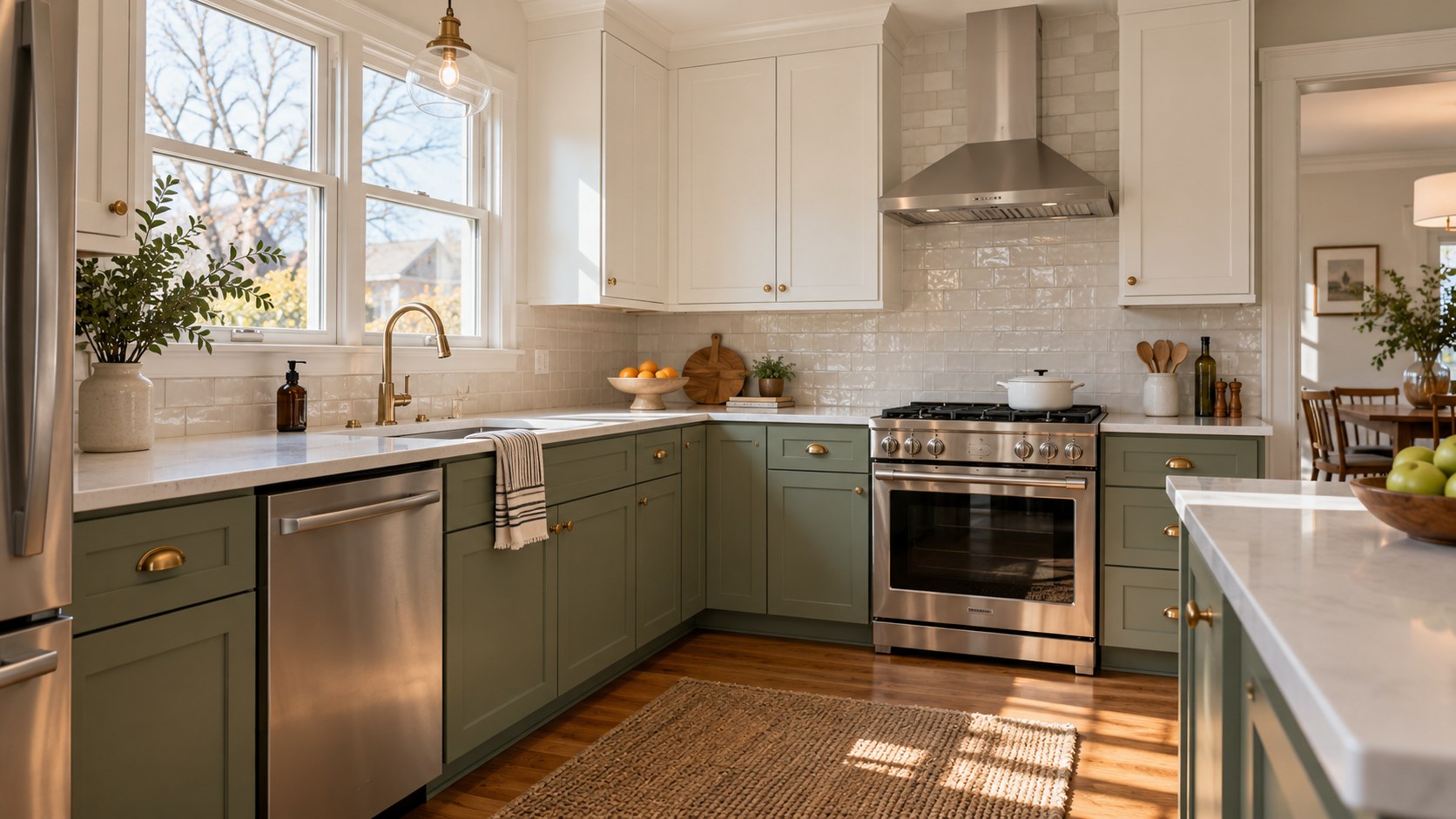
Cabinet painters in Littleton, CO can give a dated kitchen a new look without a full tear-out, and a two-tone scheme is one of the most popular ways to do it. AXXESS Painting and Remodeling, a licensed and fully insured Thornton company, paints cabinets for homeowners across the Denver metro, including the Littleton area. This guide covers how two-tone cabinets work, what the prep really involves, and what to ask before you hire.
The short version: sand, prime and coat the right way, give the paint time to cure, and pick colors that suit your light. Do those four things and painted cabinets hold up to daily kitchen life.
TL;DR
- Two-tone cabinets (a darker or color tone below, a lighter tone above) add contrast without repainting the whole room.
- Prep decides the result. Cabinet doors need cleaning, sanding and primer before any color goes on.
- Waterborne alkyd enamels can feel dry within hours but need days to cure and up to a month to reach full hardness, according to Benjamin Moore.
- Painting is generally permit-exempt in Littleton, but a kitchen that moves cabinets, outlets or plumbing is a different project.
What is two-tone cabinet painting?
Two-tone cabinet painting means finishing the upper and lower cabinets in two different colors. A common pairing is a deeper color on the base cabinets and a white or soft neutral on the wall cabinets. The split breaks up a large run of cabinetry and gives the kitchen a clear focal point.
There are a few ways to split a kitchen, and each one changes the feel of the room. Here are the options we see homeowners weigh most often:
- Dark base, light uppers: The lower cabinets carry the color and the uppers stay bright. This keeps walls and windows feeling open.
- Island only: The perimeter cabinets stay one color and the island gets an accent. It is the lowest-commitment way to try color.
- Pantry or tall cabinets in the accent color: This works when the kitchen has one wall of tall storage you want to feature.
- Same color, two sheens: The color matches but the finish differs. It is subtle and works for people who want a quiet change.
The featured photo at the top shows the idea: soft sage green on the lower cabinets with white uppers. It is an illustrative image of the look, not a specific Axxess project.
Is two-tone a good choice for a Littleton kitchen?
Two-tone is a good choice when your kitchen has plenty of cabinets and you want visual depth without darkening the room. It is a weaker choice in a small, windowless kitchen where a dark lower color can make the space feel tight. Natural light and layout should drive the decision.
Lighting is where most color choices go wrong. A color that looks soft in a store can look flat or cold at home. Look at samples on the actual cabinet doors, at different times of day, with your own bulbs on. Morning sun, afternoon sun and evening lamps all change how a color reads.
How to test a color before you commit
Paint a large sample on a spare door or a piece of board and tape it up. Leave it for several days. Check it next to your countertop, backsplash and floor, because those surfaces do not change and the paint has to live with them.
If you want help narrowing it down, color consulting is part of the work we do. Bring photos of your kitchen and the finishes you plan to keep.
Can you paint kitchen cabinets without replacing them?
Yes, you can paint kitchen cabinets without replacing them when the boxes and doors are in sound condition. Painting changes the finish, not the structure. It will not fix water-damaged panels, failed hinges or a layout that does not work for you.
That is why a short honest assessment comes first. If the cabinets are solid, painting is often a practical way to refresh a kitchen. If the boxes are damaged or the layout is the real problem, painting only hides the issue for a while. In that case, a broader kitchen project may make more sense. Our kitchen remodeling service covers that route, and our Broomfield kitchen planning guide explains how to think through a larger remodel.
When painting makes sense
- Solid construction: Doors and frames are straight, tight and free of rot or swelling.
- A layout you like: You are happy with where everything sits and only dislike the color or worn finish.
- Hardware you can reuse or swap: New pulls and hinges are a simple upgrade during a paint project.
When another route is better
- Water damage or swelling: Paint will not stop it from coming back.
- Peeling laminate or thermofoil: These surfaces can be hard to bond to and may need a different plan.
- A layout that frustrates you: Moving things is remodeling, not painting.
What does proper cabinet prep involve?
Proper cabinet prep means removing doors and hardware, deep cleaning off kitchen grease, repairing damage, sanding, and applying a bonding primer before any color. Skipping a step is a common reason painted cabinets chip or peel. Manufacturers say as much: Benjamin Moore calls for clean, dry surfaces free of grease, oil, wax and soap.
Kitchens are tough on paint because cabinet fronts collect cooking oil and hand oils over the years. Paint does not stick well to grease. A thorough degreasing is not optional.
Step-by-step: how cabinet prep works
- Remove doors, drawer fronts and hardware. Label each one so everything goes back in the right place.
- Clean and degrease. Remove cooking residue, soap film and wax from every surface that will be painted.
- Repair. Fill nicks, dents and old hardware holes. Let the filler dry and sand it flush.
- Sand. Benjamin Moore's data sheet for its Advance cabinet enamel calls for roughening cabinet surfaces by sanding with 220 grit or coarser before priming.
- Prime. The same data sheet lists specific primers for wood and engineered wood. A primer helps the color coat grip and helps stop stains and tannins from bleeding through.
- Apply the finish coats. Thin, even coats with proper drying time between them give the best look.
Why the paint itself matters
Cabinets need a harder, smoother finish than a wall. Benjamin Moore describes waterborne alkyd paint as combining the flow and leveling of oil-based paint with soap-and-water cleanup, and notes it is a favorite for kitchen cabinets, trim and doors. We use premium materials and techniques on every job, and cabinet work is where that choice shows up most.
Ask any painter which product they plan to use and why. A good answer names the primer, the enamel and the sheen. A vague answer is a warning sign.
How long does cabinet paint take to dry and cure?
Cabinet paint feels dry in hours but takes much longer to cure. For Benjamin Moore Advance, the data sheet lists 4 to 6 hours to touch and 16 hours to recoat, and says not to expose the surface to heavy abrasion for at least 5 to 7 days. It can take up to 30 days to reach optimum hardness and final sheen.
Those figures come from one manufacturer's product. Other paints differ, so ask your painter for the data sheet on the product they use. The pattern holds across most cabinet enamels, though: dry to the touch is not the same as cured.
How to treat new cabinets in the first few weeks
- Go gentle early: Open and close doors with care and avoid slamming them.
- Skip the heavy cleaning: Wipe with a soft damp cloth for now and save stronger cleaners for later.
Does Colorado weather affect cabinet painting?
It can. Benjamin Moore lists application limits of 50 to 90 degrees Fahrenheit for its Advance enamel and notes that high humidity or cooler temperatures prolong dry, recoat and cure times. A heated, comfortable indoor space is usually fine, but a cold garage or an open window on a chilly day is not. Good scheduling and a controlled work area matter more than the season.
Do you need a permit to paint cabinets in Littleton?
Usually not. The City of Littleton's residential permit guide lists painting, papering, tiling, carpeting and similar finish work as generally exempt from building permits. Cabinets and countertops can also be exempt when the work is truly limited to finishes. Moving outlets, lighting or plumbing is not finish work and needs permits.
The city also warns homeowners not to assume a kitchen project is only cosmetic, because cabinet, countertop, fixture and appliance locations can trigger electrical code requirements. If your plan goes beyond paint, check with the City of Littleton before work starts. Rules and exemptions can change, and the city's guide is the final word.
If your home sits inside a homeowners association, review its rules too. Exterior changes are the usual focus, but it never hurts to confirm what applies to you.
What about older homes and lead paint?
If your home was built before 1978, the cabinets or trim may contain lead-based paint under older coats. The EPA's Renovation, Repair and Painting rule requires that anyone paid to disturb painted surfaces in pre-1978 homes be certified and trained in lead-safe work. Ask any contractor about this before sanding starts.
The EPA also notes that an EPA-recognized lead test kit, used by a trained professional, can reliably show that regulated lead-based paint is not present when the result is negative. Sanding is exactly the kind of work that creates dust, so this is not a step to skip. We cover the topic in more depth in our Lakewood interior painting guide.
How do you choose a cabinet painter in the Littleton area?
Choose a cabinet painter who is licensed and insured, explains the full process in plain terms, names the primer and paint, and gives you a written scope. Communication matters as much as skill. You are letting someone remove your doors and work in your kitchen for days, so you need to trust them.
Here is a short checklist to bring to every estimate:
- License and insurance: Ask for proof, not just a promise.
- Process: Ask how doors are removed, cleaned, sanded, primed and finished. Ask where the work happens.
- Products: Ask for the name of the primer and enamel and the sheen.
- Cure guidance: Ask how long before you can use the cabinets normally.
- Communication: Ask who your contact is and how updates arrive.
- Walkthrough: Ask whether there is a final review of the finished work with you.
What working with AXXESS looks like
We are licensed and fully insured, and we use premium materials and techniques. We keep communication responsive, and our service process has four steps and ends with a final walkthrough, so you see the finished work and can raise anything before we wrap up. We are based in Thornton and serve homeowners across the Denver metro, including the Littleton area. We do not have an office in Littleton, and we say so up front.
For pricing and timing on cabinet painting in general, our Thornton guide, Cabinet Painting in Thornton: Cost, Timeline, and What to Expect, covers those questions. Your own quote will depend on the number of doors and drawer fronts, their condition and the finish you choose.
Should the walls and trim match the new cabinets?
Often yes, or at least they should be planned together. New cabinet colors can make old wall paint look tired, and trim that was fine yesterday can look yellow next to crisp white uppers. Many homeowners add wall or trim painting to the same visit to keep the kitchen consistent.
Our interior painting service covers walls, trim and doors, which makes it easy to combine with cabinet work. Bundling can also keep the number of disruptions down, since the crew is already in your home.
What are the most common cabinet painting mistakes?
The most common mistakes are skipping the degreasing step, painting over glossy surfaces without sanding, using wall paint instead of a cabinet enamel, and putting doors back into service too soon. Each one leads to the same result: chipping, sticky doors and a finish that wears fast.
- Painting dirty cabinets: Grease blocks adhesion and shows up as peeling near handles and stove areas.
- Skipping primer: Color alone often will not bond well to old finishes.
- Rushing the coats: Recoating too soon can leave a soft, tacky finish.
- Closing doors too early: Fresh paint on touching surfaces can stick and tear.
- Choosing color from a small chip: Always test a large sample in your kitchen's light.
Frequently asked questions
How much do cabinet painters charge in Littleton?
Prices depend on the number of doors and drawer fronts, their condition, the products used and the scope of prep. We do not quote a flat range here because every kitchen is different. The fastest way to get a real number is a free estimate where we look at your cabinets in person.
Can I paint only the lower cabinets?
Yes, and it is a common choice. Some homeowners paint the base cabinets and leave the uppers in their existing finish. Make sure the leftover finish is in good shape and that the two will look good together, because the contrast will be obvious.
Will painted cabinets chip?
Any painted surface can chip with hard use, especially at edges and around handles. Good prep, a quality primer, a cabinet-grade enamel and enough cure time reduce the risk a great deal. Treat the cabinets gently for the first few weeks while the paint hardens.
Can you paint cabinets in an older home?
Yes, but homes built before 1978 may have lead-based paint on the surfaces. Anyone paid to disturb that paint should follow the EPA's lead-safe rules. Ask your contractor about lead-safe practices before any sanding begins.
Ready to talk about your kitchen?
If you want to see what two-tone cabinets could do in your Littleton-area kitchen, AXXESS Painting and Remodeling offers free estimates. Call (720) 226-5092 or request your free estimate online. You can also learn more about our company before you call.
