axxessp.r1@gmail.com
Thornton, Colorado




October 13, 2026
Fence Staining in Boulder, CO: Prep, Timing, Rules

- Stain a Boulder fence when the wood is dry and the weather is mild. Stain makers point to a safe range of 50 to 90 degrees Fahrenheit, with about 70 as the best case.
- New treated wood needs time to dry first. One industry source says about 60 days, and a simple water drop test tells you if the boards are ready.
- Prep decides the result. Clean, dry, sound wood takes stain evenly. Dirt, mildew and loose fibers do not.
- Staining is maintenance, but rebuilding a fence is a different story. Confirm anything beyond staining with the City of Boulder and your HOA.
Fence staining in Boulder, CO works best on clean, dry wood in mild, calm weather, with a stain matched to the wood and the amount of sun the fence gets. Skip any of those three and the finish can blotch, peel or wear off early. AXXESS Painting and Remodeling is a licensed and fully insured contractor based in Thornton, Colorado, and Boulder is one of the cities we serve.
This guide is written for Boulder homeowners who want to stain a privacy fence, a cedar fence or a garden gate and want to do it in the right order. You will learn when to schedule the work, how to tell if new boards are ready, how to prep, which stain type to choose, and what to confirm with the city before you start.
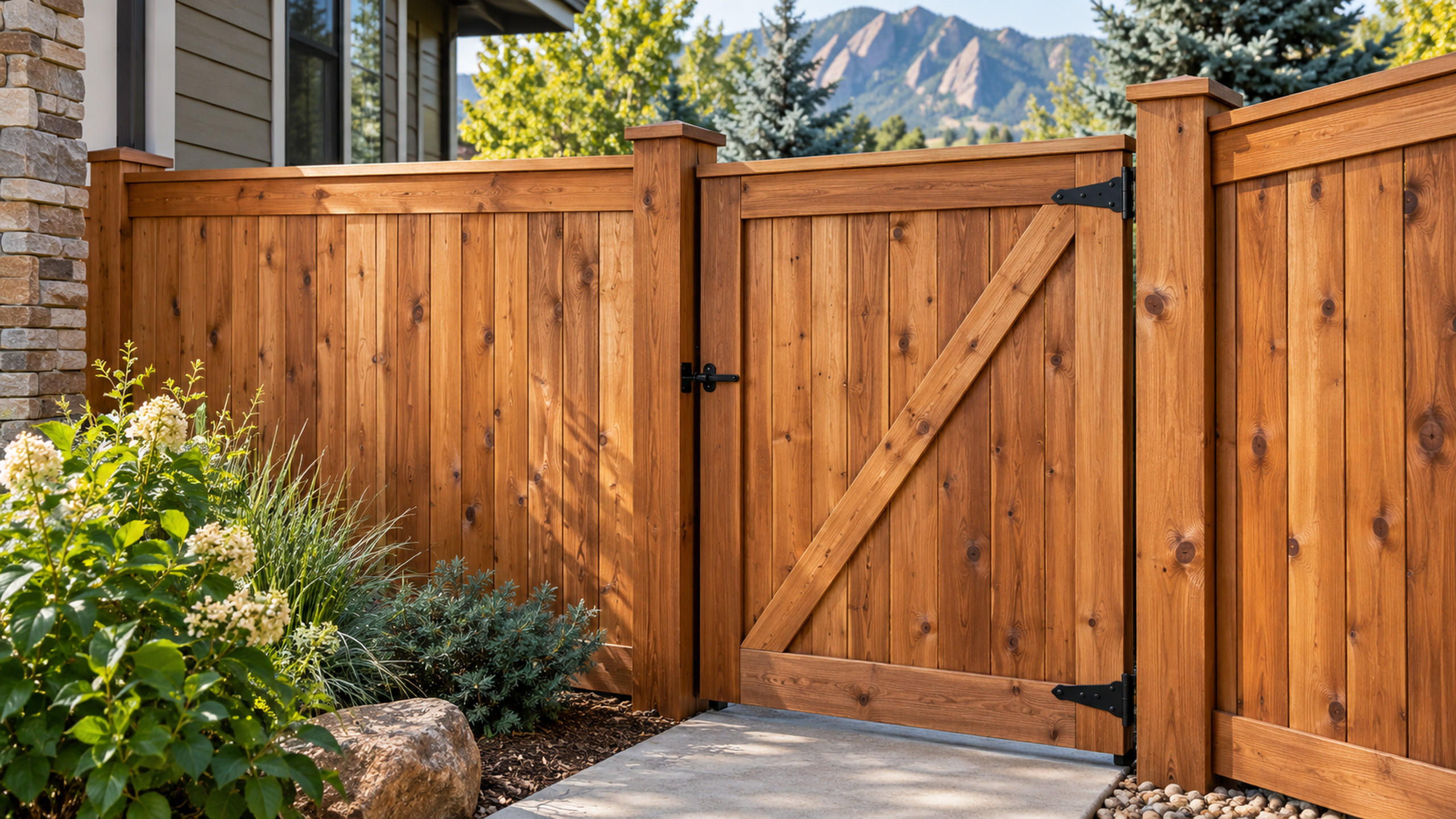
When is the best time to stain a fence in Boulder?
The best time to stain a fence in Boulder is a dry, mild stretch when the air and the wood sit between 50 and 90 degrees Fahrenheit. Late spring and early fall often give that window. Check the forecast for the day of the job and for the two days after it.
What temperature range should you work in?
Sherwin-Williams says that for most stains, 70 degrees Fahrenheit is the optimum, with a safe range from 50 to 90 degrees. It also says stains vary, so the label on your can is the final word. A Cabot wood stain data sheet we opened tells users not to apply when the air or surface temperature is below 50 degrees or may fall below 50 degrees for 48 hours after application.
That second rule is the one that catches people in Boulder. A warm October afternoon can be followed by a cold night, and the label cares about both. Look at the overnight lows for the next two days before you open the can.
How long should you wait after rain or snow?
Sherwin-Williams advises letting the surface dry for two to three days after a rain storm before you stain. The same idea applies after snow melts, because the wood holds moisture after the surface looks dry.
Should you stain in direct sun?
No. Both the Sherwin-Williams guidance and the Cabot data sheet say to avoid hot surfaces and direct sun. Start on a side of the fence that is not in direct sunlight, and follow the shade around the yard as the day goes on.
How do you know if a new fence is ready to stain?
A new pressure-treated fence is ready to stain when the wood readily absorbs water. Sprinkle a few drops on a board. If they soak in, the board is dry enough to finish. If the drops bead up, wait longer and test again in a few days.
Treated lumber leaves the mill with moisture from the preservative process. The treatedwood.com guide we read says treated wood will typically be ready about 60 days after installation, and adds that exact drying time is hard to predict. It depends on the time since pressure treatment, sun exposure, local temperature and recent weather.
Cabot's data sheet says new treated wood should be tested for porosity before application, which is the same idea in a manufacturer's words. Treat the 60 days as a starting point and let the water test make the call.
How do you prep a wood fence for stain?
Prep a wood fence by cleaning off dirt and mildew, removing loose wood fibers, making repairs, and letting everything dry fully. Cabot's data sheet says surfaces must be sound and absolutely dry. Stain goes on last, after the wood is clean, repaired and ready to absorb it.
What does a good prep list look like?
- Walk the fence and mark problems. Look for loose boards, popped fasteners, split rails, rot at the base and leaning posts. Repair these before you stain, because stain will not hide a failing board.
- Clean the surface. The Cabot sheet calls for removing all dirt, mildew stains, loose wood fibers and other foreign matter. For previously stained or weathered wood, it names a wood cleaner, and a wood brightener for badly weathered surfaces.
- Protect what is nearby. Cover plants, hinges, latches, concrete and the house wall where the fence meets it. Stain on a stucco wall or a patio is hard to remove.
- Let it dry. After any washing, give the wood time to dry before stain goes on, and apply the same water drop test.
Can you stain over old paint or sealer?
Usually not with a stain. The Cabot data sheet says not to apply over previously painted or sealed surfaces. A fence with old paint or a film-forming sealer needs the old coating dealt with, or it needs a different product.
Which type of fence stain should you choose?
Choose a fence stain by how much of the wood grain you want to see and how much sun the fence takes. Clear and lightly tinted products show the most grain. Heavily pigmented products hide more grain and block more sun. Always follow the label for your specific wood and product.
Here is a plain comparison of the common choices. These are general differences, not a promise about any one brand.
- Oil-based stain: Soaks into the wood and is usually applied with a natural-bristle brush, according to Sherwin-Williams. Cleanup needs the solvent named on the label.
- Water-based (latex) stain: Applied with a synthetic-bristle brush, according to Sherwin-Williams. Cleanup is usually soap and water, but check the label.
- Transparent or lightly tinted: Shows the most grain and the most natural wood color. It offers the least pigment, so it gives sun the least resistance, which suggests more frequent upkeep on a sunny fence.
- Semi-transparent: Adds visible color while still showing grain.
- Solid color: Looks more like paint and hides grain. It can even out a fence with mixed boards or patchy old color. Cabot's sheet notes some of its products should not go over painted or sealed surfaces, so read the label first.
Color matters as much as type. Test a small patch on a hidden board and let it dry before you judge it, since the same stain can look different on different wood.
If your project also includes doors, trim or siding, our interior and exterior painting service covers those surfaces, and our Parker trim and door guide shows how we think about them.
How do you apply fence stain without lap marks?
Apply fence stain in manageable sections, brushing or wiping with the grain, and always work from unstained wood back into the last wet edge. Sherwin-Williams says this avoids lap marks. Stop only at a natural break, and wipe off excess stain rather than letting it pool.
What does the application step look like?
- Start in the shade. Begin on a side of the fence that is not in direct sunlight.
- Work with the grain. Apply stain with smooth, even strokes in the direction of the grain, then wipe off any excess, as Sherwin-Williams describes.
- Work in small groups of boards. For vertical boards, Sherwin-Williams suggests staining from top to bottom, three to five boards at a time.
- Stop at natural breaks. On a fence, that means a post, a gate or a corner, not the middle of a panel.
- Add a second coat only if the product and wood call for it. Sherwin-Williams says a second coat suits badly weathered or unfinished wood, with the first coat dry completely, usually 24 hours. The Cabot data sheet we read says to apply one coat only, so follow your label.
How much stain will you need?
Coverage depends on the product and the wood. The Cabot data sheet lists approximately 250 to 350 square feet per gallon for that product. As a made-up example, a fence 100 feet long and 6 feet high has 600 square feet per side. That is roughly two to just under two and a half gallons per side at that rate, before rough boards soak up more. Use your own label's number, not this one.
Rough or weathered wood usually drinks more stain than smooth wood, so buy a little extra.
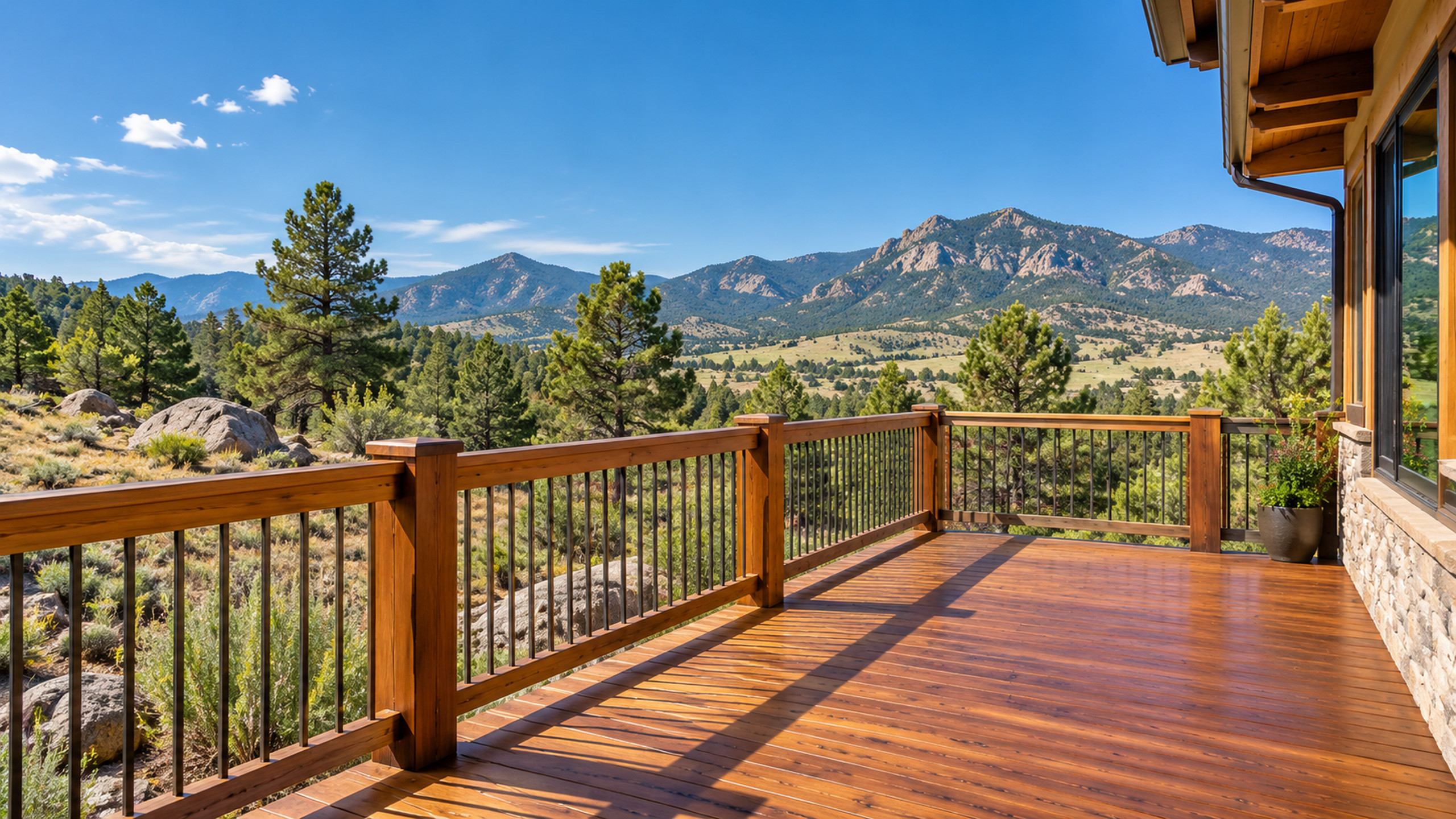
Do you need a permit or approval to stain a fence in Boulder?
Staining is routine upkeep, and the City of Boulder fence page we read does not mention staining or painting at all. Because it is silent, call the city if you have any doubt. Building or replacing a fence has real rules, and an HOA or historic district may add its own.
Here is what the city does say about fences themselves. Fences not over 7 feet tall are exempt from building permit requirements. Fences in a floodplain, a wetland, a historic district or on an individual landmark property need additional approvals, such as a floodplain development permit, a wetland permit or a landmark alteration certificate.
What if you are replacing boards or rebuilding?
If your stain job turns into a repair or a rebuild, read the city requirements first. A City of Boulder fence guide says fences may not exceed 7 feet in height, and that a fence should be located inside the property line and a minimum of 18 inches from any public sidewalk. It also lists clearances around fire hydrants and water meters, and says a fence may not obstruct the sight triangle of intersecting public rights-of-way or a driveway.
Corner lots have extra site triangle rules, so ask the city for exact numbers. Rules change, so treat this summary as a starting point and confirm with the city.
What about your HOA?
Many neighborhoods have their own rules about stain color and fence appearance, even for simple maintenance. We cannot tell you what yours says. Check your HOA documents or ask your management company before you buy stain, especially if you plan to change the color.
Should you stain the fence yourself or hire a painter?
Stain a short fence yourself if you have a dry weekend, the right tools and no ladder work. Hire a painter when the fence is long, tall, in poor shape or near a wall you need to protect.
- Do it yourself when: the fence is short and in good shape, you can finish a section the same day, and you are comfortable with cleaning products and stain safety.
- Hire a pro when: there are loose or rotting boards, tall or sloped runs, tight spots against a house or garage, or a deadline before the weather turns.
- Ask for a written scope either way: cleaning, repairs, number of coats, stain type, and who handles cleanup.
AXXESS Painting and Remodeling follows a four-step service process that ends with a final walkthrough, and we stay responsive while the job is underway. If your fence connects to a deck or patio, our deck and patio construction service and our deck staining timing guide cover the horizontal surfaces that wear faster. For wider repairs, see our general residential construction page.
Frequently asked questions about fence staining in Boulder
How long should I wait to stain a new fence?
One industry source says treated wood is typically ready about 60 days after installation, but drying time is hard to predict. Use the water drop test instead of a calendar. If the drops soak in, the wood can take stain. If they bead up, wait and test again.
Can I stain a fence in the fall in Boulder?
Yes, if the wood is dry and temperatures stay in the product's range. The Cabot data sheet says not to apply when temperatures are below 50 degrees or may fall below 50 degrees for 48 hours afterward. Check the overnight lows, not only the afternoon high, and read your label.
Do I need to clean the fence before staining?
Yes. Dirt, mildew and loose fibers keep stain from soaking in evenly. The Cabot data sheet calls for removing them, and it names a wood cleaner and a brightener for weathered wood. Let the fence dry fully after cleaning before you open the stain.
Can I use stain over old paint?
Usually not. The Cabot data sheet says not to apply that product over previously painted or sealed surfaces. A painted fence often needs the old coating addressed or a different product, so check your label or ask a painter first.
Does the City of Boulder require a permit to stain a fence?
The city fence page we read does not mention staining or painting. It says fences not over 7 feet tall are exempt from building permit requirements, with extra approvals in floodplains, wetlands, historic districts and landmark properties. Call the city if you are unsure about your lot.
Ready to get your Boulder fence stained?
Good fence staining comes down to dry wood, mild weather, honest prep and a stain that fits the fence. If you would rather have a licensed, fully insured crew handle it, AXXESS Painting and Remodeling offers free estimates for homeowners in the Boulder area.
Call (720) 226-5092 or request your free estimate online. You can also learn more about our company.
