axxessp.r1@gmail.com
Thornton, Colorado




September 29, 2026
Exterior House Painters in Arvada: Weather and Wear

- Repaint by condition, not by calendar. South and west walls in Arvada fade, chalk and crack years before shaded walls do.
- Timing matters. Late spring, early fall and dry stretches in between give paint the calmest conditions to cure.
- Hail season runs roughly April to September. Inspect after storms and finish repairs before you paint.
- Read the estimate for prep. Scraping, sanding, repairs, primer and coat counts tell you more than the total.
The best exterior house painters in Arvada plan around the weather first and the color second. Front Range sun, dry air, wind, hail and freeze-thaw swings all wear on paint, so timing and prep decide how long a job lasts.
AXXESS Painting and Remodeling is a licensed and fully insured contractor in Thornton, Colorado. We paint exteriors for Arvada homeowners and the surrounding Front Range communities. This guide explains what the climate does to your siding and trim, when to schedule the work, and how to read an estimate.
This is not a price guide. We cover cost and the job from start to finish in our exterior painting cost breakdown and our what-to-expect guide. This one is about weather and wear.
How often should you repaint a house in Colorado?
There is no single number. Repaint when the paint shows wear, not when a calendar says so. Sun-facing walls usually fail first, often well before shaded ones. Check each side every spring and plan a job when you see chalking, cracking, peeling or bare wood.
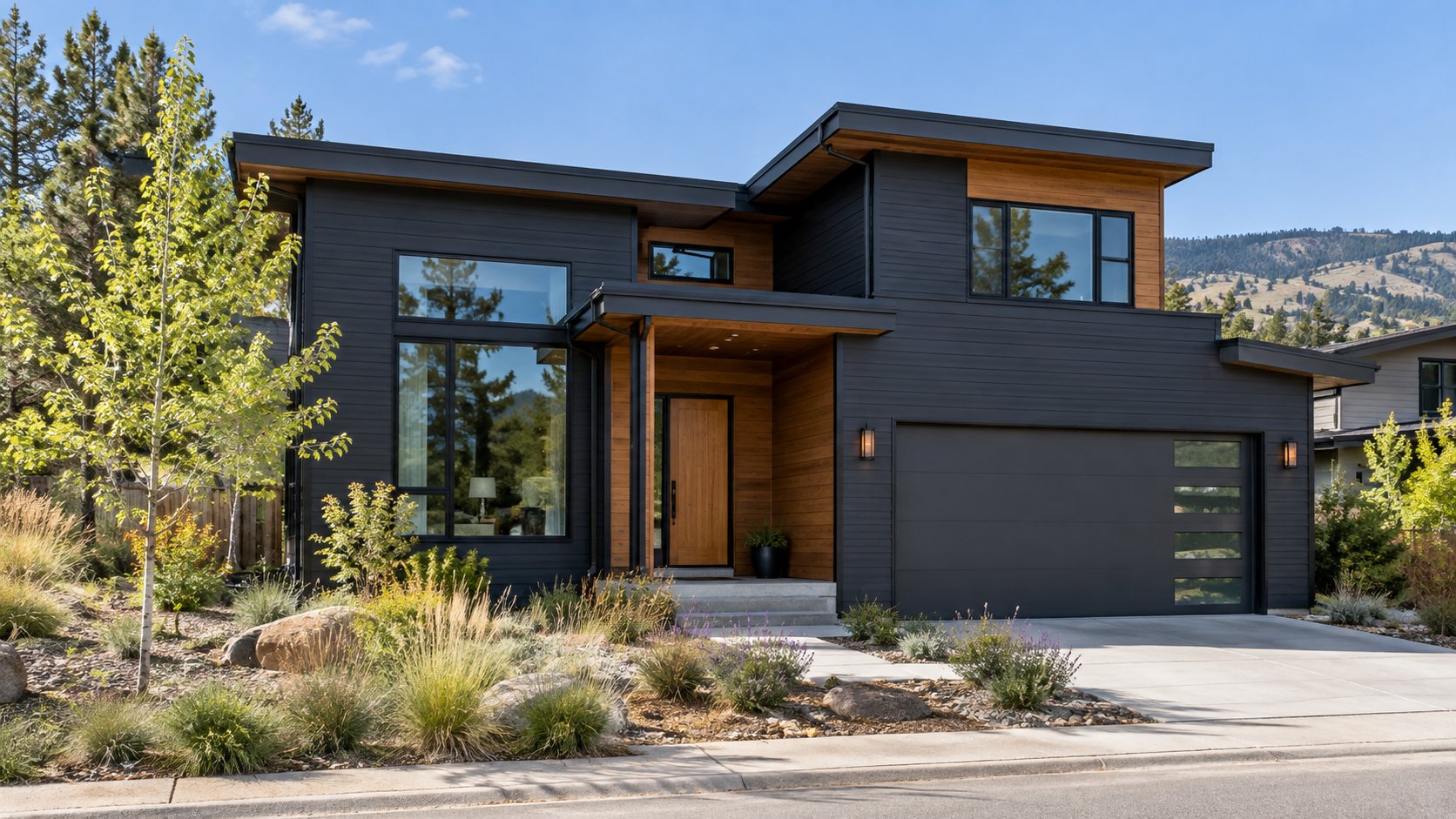
Houses do not age evenly. A west wall that takes afternoon sun and wind can look tired while the north side still looks fresh.
Signs your exterior is asking for paint
- Chalking: rub a dry hand across the wall. If a chalky powder comes off, the paint binder is breaking down.
- Fading: colors look washed out, especially on south and west walls.
- Cracking or alligatoring: the paint film splits into small blocks or a scaly pattern.
- Peeling or bubbling: paint lifts in sheets or blisters, often near windows, corners and the base of walls.
Catching these early is cheaper than waiting. Faded or lightly chalky paint often needs cleaning, spot repair and new coats. Paint peeled to bare wood needs scraping, sanding, priming and sometimes carpentry first.
What does Arvada weather do to exterior paint?
Arvada weather stresses paint in four ways: strong sun, dry air with wind, hail, and repeated freezing and thawing. Each one attacks a different part of the coating. Together they explain why paint on the Front Range often wears out on the sunny and windy sides of a house first.
To keep things grounded, here is what the numbers say. According to Weather Spark's Arvada climate summary, temperatures typically range from 24°F to 88°F over the year. It also lists September as the clearest month. That is a wide swing for a coating that has to stay flexible.
Sun and UV: the slow fade
Sunlight breaks paint down from the outside in. The U.S. Forest Products Laboratory explains in its wood finishing chapter that ultraviolet radiation in sunlight degrades the surface of unfinished wood through photo-oxidation. Paint protects wood from that, but the paint itself also ages in the sun.
In practice, UV shows up as fading first, then chalking, then thin spots where the film stops protecting. South and west walls get the most sun, so they show it first.
Our post on choosing exterior colors for Colorado's climate goes deeper on that side of the decision.
Dry air and wind: fast drying, weak bonds
Low humidity and wind pull moisture out of wood and out of wet paint. Wood then shrinks and swells as conditions change. Wet paint can also dry too fast on a hot, breezy day, before it has fully bonded to the surface.
Sherwin-Williams says in its exterior application FAQ that extremely high temperatures, over 100°F, can make a paint film dry before it properly adheres. It also advises avoiding painting in direct sunlight. Good crews plan around this by following the shade around the house instead of painting a hot wall at midday.
Freeze-thaw: water gets in, then expands
Water is the real enemy of exterior paint. The Forest Products Laboratory notes that water accelerates paint degradation and that swelling and shrinking of wood stress the paint film. It also warns that water entering through cracks at joints can get trapped behind the coating.
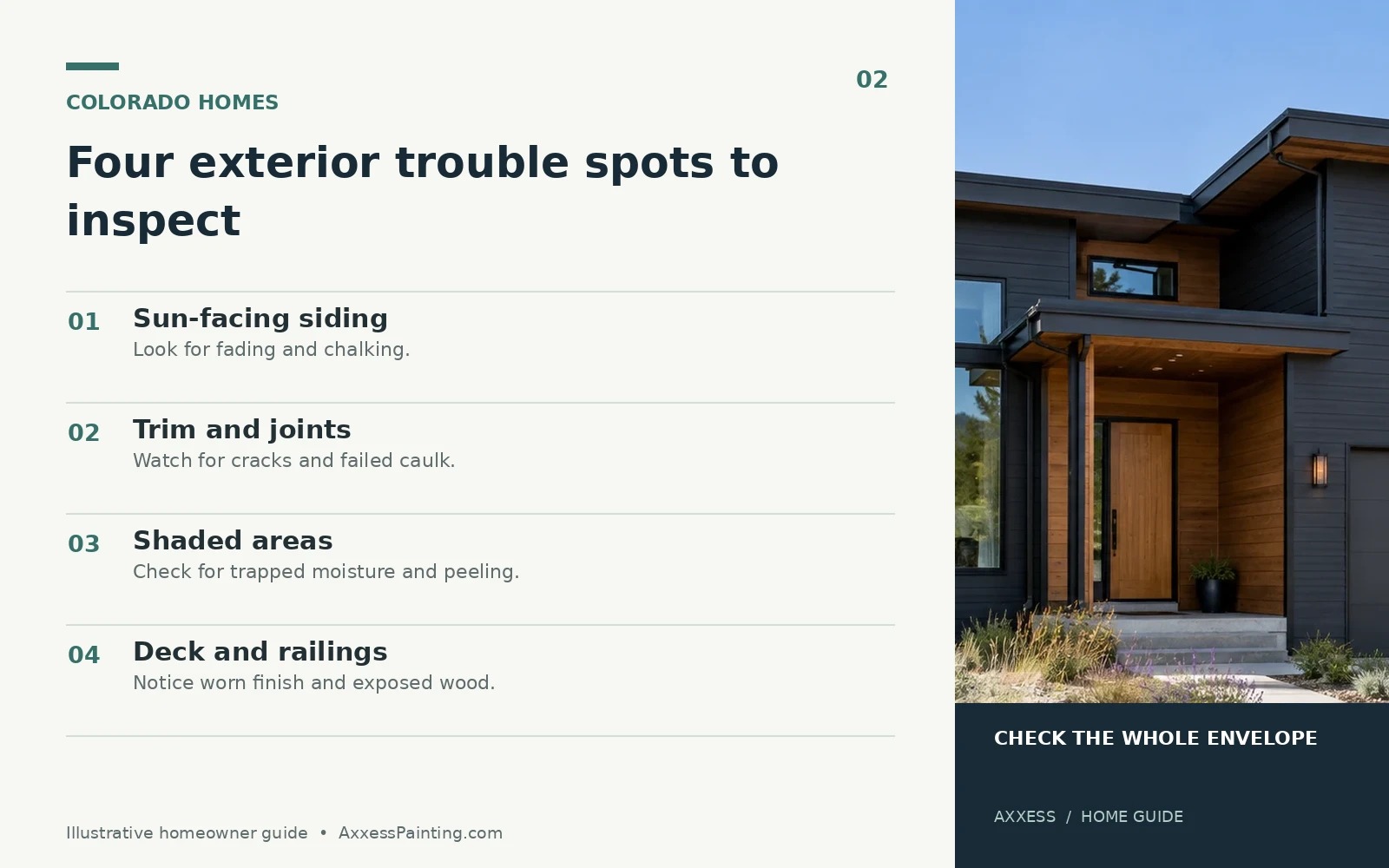
Arvada winters bring cold nights and milder days, so that trapped moisture can freeze and thaw again and again. Any small gap in caulk, any cracked seam and any exposed end grain becomes a path for water. This is why we look at joints, trim and the bottom of walls as closely as the flat siding.
What is the best time of year to paint a house exterior in Colorado?
Late spring and early fall are usually the best windows in Colorado. Days are mild, nights are not too cold, and paint has time to cure. Summer works with early starts. Late fall works only if daytime highs and nighttime lows stay inside your paint's stated limits.
Paint needs the right air and surface temperature, low moisture and a few dry days. Sherwin-Williams says some of its newer exterior products can be applied and will cure at temperatures as low as 35°F. Older formulas need warmer weather. Always check the label on the specific paint being used, because limits vary by product.
Here is how the seasons compare for Arvada exteriors:
- Spring (April to May): Temperatures are improving and surfaces dry out after winter. The trade-off is unsettled weather, plus hail season starts in mid-to-late April according to BoulderWeather.com. Book early and expect some weather delays.
- Early summer (June to July): Long days help, but this is the peak of hail season and the sun is intense. Crews often start on shaded walls in the morning and follow the shade around the house.
- Late summer and early fall (August to September): Often the sweet spot. Storm activity tapers, and September is the clearest month in Arvada per Weather Spark. Schedules fill up, so plan ahead.
- Late fall (October and later): Possible on the right days, but cold nights leave less margin. Dew and low overnight temperatures can hurt fresh paint if the product is not built for it.
- Winter: Exterior work is usually a poor fit. It is a better season for interior projects like basement finishing and interior painting.
Why the overnight low matters as much as the daytime high
Sherwin-Williams points out in its late-season painting guidance that dew forms on almost everything after sunset and can seep into uncured paint. When that moisture evaporates, it can cause surface staining and adhesion problems.
Its FAQ also says temperatures should stay in the suggested range and above the dew point for at least 48 hours after application. The next two nights count too.
Wait after rain and snow
The Sherwin-Williams FAQ says to wait a minimum of one day after a heavy rain and that the surface must be dry before painting. The Forest Products Laboratory adds that painting wood with a moisture content above 20 percent raises the risk of blistering and peeling.
How does hail damage affect exterior paint?
Hail can chip paint, bruise siding and open small cracks that let water in. Damage is not always obvious from the ground. Inspect the house after a storm, fix damaged surfaces first, then paint. Painting over dents, splits or bare spots wastes money and hides problems.
The BoulderWeather.com hail season article describes the Front Range corridor between Boulder, Denver and Cheyenne as the most hail-prone stretch of the United States. It says the season usually starts in mid-to-late April, peaks from late May through mid-July and is effectively over by mid-September. It also says storms fire mostly between about 1 p.m. and 7 p.m.
Fresh paint needs dry time, and afternoon storms are common in the peak months. A crew that watches the radar protects your investment.
What to check after a hail storm
- Siding and trim: look for dents, cracks, splits and chipped paint, especially on the side that faced the storm.
- Soft metals: check gutters, downspouts and window screens for dents. They often show damage first.
- Caulk and seams: look for gaps or cracks where water could enter.
If you plan to file an insurance claim, talk to your insurer before repairs or repainting. Coverage rules differ, and we are a painting contractor, not an insurance adviser. Keep the paint work in the plan, but let the claim and the repairs come first.
For repairs beyond paint, see our general residential construction work.
What prep and paint choices hold up on the Front Range?
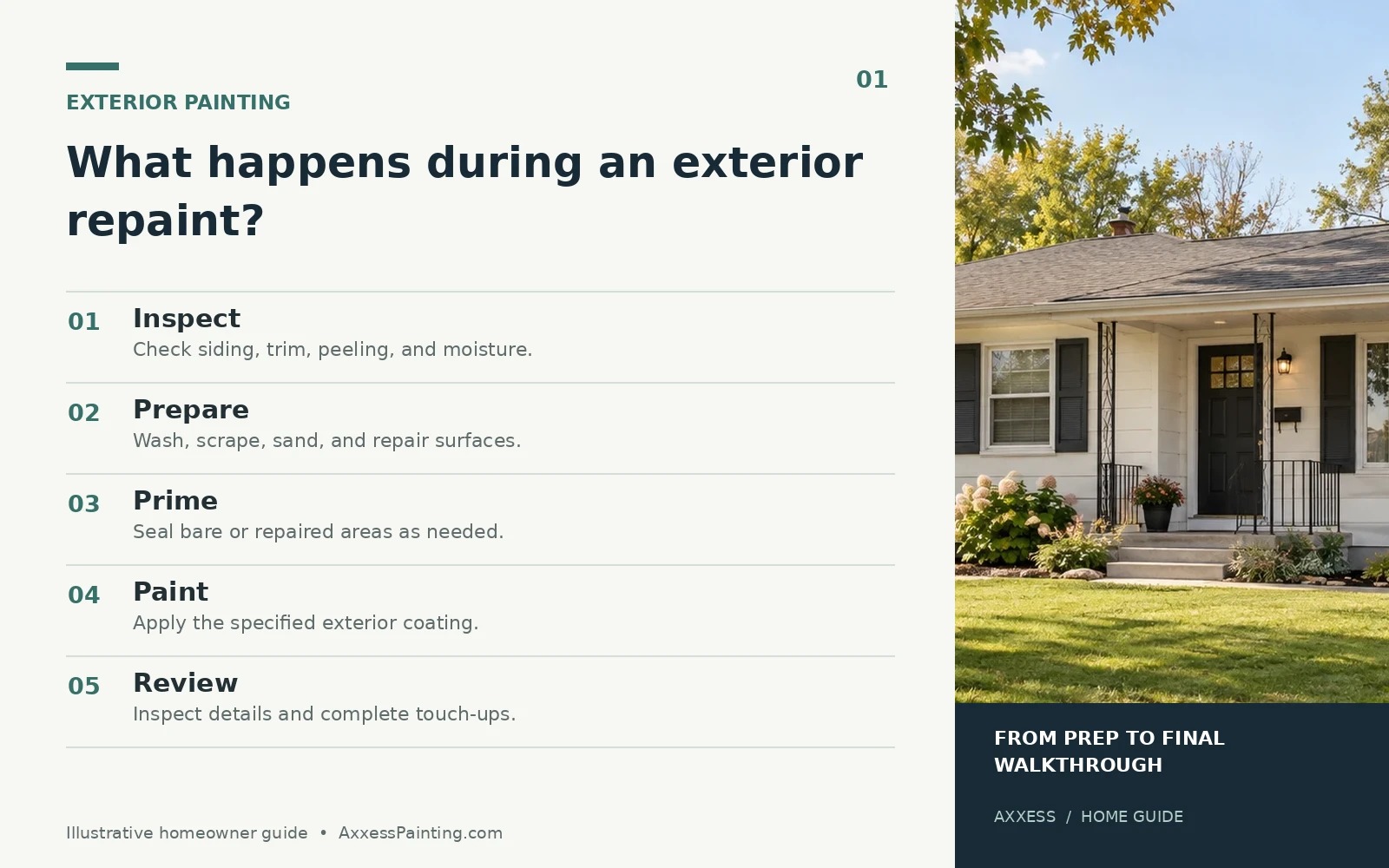
Prep matters more than the brand on the can. The right prep is thorough cleaning, scraping loose paint, sanding, sealing gaps, priming bare spots and applying enough coats. Then choose a quality exterior paint made for temperature swings, sun and moisture.
Ask any painter what is included, because prep is where cheap jobs cut corners. The Forest Products Laboratory says scuff sanding gives a much better surface for painting, extends the paint's service life and improves the bond. It also describes primer as the base for all the coats that follow.
The prep steps that pay off
- Wash the surface. Dirt, chalk and mildew stop new paint from bonding.
- Scrape and sand. Remove loose paint and feather the edges so ridges do not show through.
- Repair. Fix rotted wood, split trim and damaged siding before any paint goes on.
- Caulk the right gaps. Seal joints and trim seams that move, so water stays out.
- Prime bare or repaired areas. Primer helps new paint stick and gives an even base.
- Apply finish coats in good conditions. Follow the label for temperature, dry time and coverage.
Choosing paint for sun, wind and cold
Ask a few pointed questions.
- Is it a 100 percent acrylic exterior paint? Ask the painter to name the product and line, then read its data sheet.
- What are its application limits? Check the minimum temperature and the dry time before rain or dew.
- How does it handle fading? Ask about UV and color retention, especially for dark colors on south and west walls.
AXXESS uses premium materials and techniques on its painting jobs. Our interior and exterior painting page explains our approach, and the About page tells you more about who we are.
How do you read an estimate from exterior house painters in Arvada?
A good estimate lists the surfaces, the prep work, the paint product, the number of coats and the schedule. If it only gives a total and a color name, ask for more detail. Clear scope is the easiest way to compare two bids fairly.
Two bids can look far apart when they cover different work. Compare scope first and price second.
Estimate red flags and green flags
- Green flag, prep is written out: washing, scraping, sanding, caulking and priming are all named.
- Red flag, prep is one vague line: "prep as needed" tells you nothing.
- Green flag, product and coats are named: you can look up the paint and confirm it suits an exterior.
- Red flag, no mention of weather: a good contractor explains how they handle rain, wind, heat and cold nights.
Questions to ask before you sign
- Which surfaces are included, and are trim and doors part of the price?
- What prep is planned for each surface?
- Which paint and primer will you use, and how many coats?
- What weather will pause the job, and how will you handle dry time after rain?
- How will we communicate during the job, and what does the final walkthrough include?
Our post on choosing a reliable exterior painter covers the vetting side.
AXXESS is licensed and fully insured, values responsive communication, and follows a 4-step service process that ends with a final walkthrough.
Frequently asked questions
How often should you repaint a house in Colorado?
Repaint based on condition rather than a set number of years. Sun-facing sides wear out first, so check for chalking, cracking, peeling and bare wood each spring. Catching problems early usually means less prep and lower cost.
What is the best time of year to paint a house exterior in Colorado?
Late spring and early fall are usually the most reliable. Mild days, cooler nights and a run of dry weather help paint cure. Summer can work with early starts, and late fall depends on overnight lows.
Does hail damage need to be fixed before painting?
Yes. Paint will not fix dented siding, splits or open seams. Inspect after a storm, repair damaged areas and then paint. If you are filing an insurance claim, talk to your insurer before repairs begin.
Can you paint a house exterior in cold weather?
Sometimes, but it depends on the paint. Sherwin-Williams says some of its newer exterior products can be applied and cure at temperatures as low as 35°F. Check the label for your paint and watch overnight lows and dew.
How long should I wait to paint after rain?
Sherwin-Williams recommends waiting a minimum of one day after a heavy rain and making sure the surface is dry. Wet wood can lead to blistering and peeling. Your painter should check that walls are dry before starting.
Do you serve Arvada?
Yes. AXXESS is based in Thornton and serves Arvada, Denver, Westminster, Boulder, Broomfield, Erie, Aurora, Brighton and surrounding Front Range communities.
Arvada weather is tough on paint, but a job planned around it lasts longer. Timing, prep and a clear estimate matter more than any single product choice.
Ready to talk about your exterior? Request a free estimate from AXXESS, call (720) 226-5092, or email axxessp.r1@gmail.com. We will look at how the sun, wind and weather have treated your home and give you a plain answer.
Sources: Sherwin-Williams exterior application FAQ; Sherwin-Williams late-season painting; USDA Forest Products Laboratory, Finishing of Wood; BoulderWeather.com hail season; Weather Spark, Arvada climate.
